“That’s exactly why our process aims to put you back in control of your cashflow, so that you can build a pool of cash that you have access to when you need it with no questions asked.”
When people come to meet with us, they have the mistaken belief that the reason they’re stuck financially is because they don’t earn enough income. Well, we have a secret. We have clients who make $50,000 per year, and they’re stuck financially. We have clients who make over $800,000 per year and they’re stuck financially. Now, if you’re making $800,000 per year, it’s not your income that’s holding you back.
We’ve cracked the code. What we found is, it’s not your income that’s holding you back, it’s how you’re using your money. By making your cashflow more efficient, plugging the holes in your leaky bucket, you’ll be able to experience true financial freedom.Let’s face it. Most financial frustrations arise from the fact that we don’t have access to money. Whether it’s to expand our business, educate our children, or take our family on a vacation. We’re forced to turn to banks and credit companies to get access to their money. In the process, we’re literally obligating our future cashflow to them. We found that whoever controls your cashflow, controls your life.
That’s exactly why our process aims to put you back in control of your cashflow, so that you can build a pool of cash that you have access to when you need it with no questions asked. Here’s an example of how our process helped transform a cashflow problem to true financial freedom. We met with a client about three years ago, he was an accomplished business owner earning over $400,000 a year, but he was still struggling to pay for things like private school, expanding his business, providing for his family and not to mention every quarter when taxes were due, he was drawing on a credit line to fund those taxes.
Now, as an entrepreneur, his natural inclination was to earn his way out of this problem. But after meeting with us, we identified the leaky holes in his bucket, which were primarily the fact that he was paying down his debt too quickly. He was literally taking profits from his business and transferring those profits to the bank to pay down his debt. The bank now controlled that money, those profits in his eyes, he was building equity, but he didn’t control that equity. Consequently, when it came time to pay his quarterly taxes, he didn’t have any access to money cause he gave it all to the bank. So what did he have to do? He had to draw on his credit line. When we asked him to sort of take a step back and look at what was happening, he was paying down this debt, but he was increasing this debt. Our question to him was, are you making any progress?
So let’s take a look to see how our process transformed his situation. Step one was to slow down the rate at which he was paying down his debt immediately, that increased his cashflow by over 40% per month. Now we didn’t change his revenue at all. The amount of money going into his pocket every month was exactly the same. What changed was the amount of money he was keeping. Step two was to redirect some of that money to build a pool of cash that he owned and controlled so that he would have access to it when he needed it in the future, to reach his financial goals.
Three years later, we’re proud to announce that he’s sitting on over $850,000 worth of cash. Imagine how that would feel. If three years ago you were struggling to pay your quarterly taxes and now today you’re sitting on $850,000 worth of cash. Now understand the power of this process. He’s not working any harder. His cashflow hasn’t changed. The only thing that changed is how he was using his money and because he regained control of his cashflow, he’s now regained control of his life.
” It takes discipline and focus in order to save for the future. “
This picture is what we refer to as the personal economic model. The fact of the matter is, everybody has a personal economic model. We use this diagram as a tool to show people how money works in their lives. The ultimate goal is to get to position A, where there’s enough money in the future lifestyle tanks, the risk and the safe tank to support our current lifestyle in retirement and through our life expectancy. So let’s take a look at how money works in our lives.
Let’s start by taking a look at how money enters our system. You’ll notice over here, we have the lifetime capital potential tank. You’ll also notice that this is the largest tank on the screen. That’s because anytime we earn income, whether it’s at our job, maybe an inheritance, maybe we will win the lottery, all that money flows through our lifetime capital potential tank. It doesn’t stay in there and it goes right through this tube and then hits the tax filter. Did you put the text filter on your personal economic model? No, none of us do.
It comes pre-installed on all the models and the government puts it there. What it does is, it diverts money from our lifetime capital potential and it diverts it into the government’s personal economic model. Once the money flows through the tax filter, we then reach our lifestyle regulator. This is where we have some choices. We can either save some money for our future lifestyle, or we could spend 100% of our income on our current lifestyle. After money flows through and is spent on current lifestyle, there’s no getting it back into our system and it makes it very difficult for us to reach position A. Rather than consuming all of our income. We have a choice as to how much we save for the future. Notice, that our future lifestyle tube is pointing upwards. It takes discipline and focus in order to save for the future.
Now we have some choices. We could either put money in the investment tank or the savings tank. Notice that the investment tank is labeled “risk”. There’s no lid on that tank. Depicting the fact that we have the potential to possibly lose some money in that tank. Alternatively, we can put money in the savings tank. The savings tank has a lid on it depicting the fact that we could never lose money in that tank. As long as money is in that tank.
Remember the ultimate goal is to get to position A, where we could turn off our income and we have enough money in both of these tanks to fund our lifestyle through our life expectancy. But what happens if your lifestyle regulator is turned up to 100%? That means that you’ve had very little success in saving money for the future. In the past, maybe you have a little money in your 401k at work, and maybe you have a bare minimum of an emergency fund. What happens when you’re in this position is that you have no access to capital. What happens is, you’re forced to borrow money and take on liabilities.
Maybe you have a little bit of credit card debt. Maybe you have a car loan. Maybe there’s some student loans that you haven’t had the chance to pay off yet. Notice that all of these debts have no collateral. The money spent on the credit cards, that’s gone. The car is a depreciating asset that the bank really doesn’t want.The car and the education, they can’t take your education back. So you have no collateral. But the fact of the matter is you do have collateral.
You are obligating your future income to pay those debts. And by obligating your future income, that reduces your future lifestyle and further compromises your ability to save for your future lifestyle. Consequently, that really puts in jeopardy your ability to get to position A. As you can see, we use this personal economic model to show people how money enters their system. More importantly, the consequences of all the choices that they can make with their money. Are you living within your means? If you’re not sure, we recommend you start with a budget. Take inventory of what you have coming in every month and what your monthly expenses are and what you could reasonably afford to save every month.
“We focus exclusively on making your money more efficient by showing you how to reduce or eliminate transferred money.”
This circle represents all the money that’s going to go through your hands throughout your lifetime. Now your circle might be larger than some folks and others might be larger than yours.The number one thing you have in common with everybody is that you want this circle to grow. There’s many ways that that can happen. The fact of the matter is, every dollar that goes through your circle of wealth is put into three categories. First there’s accumulated money. That’s the money you have saved and invested. Second is lifestyle money. That’s the house you live in, the car you drive and the schools your children go to. Third is transferred money. Transferred money is money that you’re giving up control of unknowingly and unnecessarily. There are two key words because unknowingly means, you don’t realize it. And unnecessarily means that, working together we can fix it.
Let me show you how we differ from traditional financial advisors. Traditional financial advisors want to take the money that you have saved and accumulated and show you how to get a higher rate of return by potentially taking on additional risk in order to do that. Well, what if you don’t want to take on additional risk? Well, you’re not a prospect for them. The second way that they can help you is they can show you how to reduce your current lifestyle in order to save more for the future. How much time do you really want to spend talking about how you could live on less? You see, nobody’s talking to you about transferred money. That’s things like interest on debt, taxes, any efficiencies in your current planning, maybe some fees nobody’s talking to you about, that transferred money.
That’s where we differ. We focus exclusively on making your money more efficient by showing you how to reduce or eliminate transferred money. Our mission is to put you in control of your money. Take a look at how we’ve let other financial institutions creep into our checkbook every month. We have a mortgage that’s due every monthand credit card bills. We have taxes that are paid before we even get our paycheck and those cars aren’t going to buy themselves. We all know this game, Tic Tac Toe, who won the first time you played ? Well for all of us, the answer is the person who showed us how to play. They showed us just enough to play, but not quite enough to win. The same is true for financial institutions, banks, and the government lending companies. They all showed us the game, but not enough to win.
Who’s teaching you the rules on how to win the financial game? That’s our job. We teach our clients and show them how to win the financial game. You see, traditional financial advisors focus only on your savings and investments. Their job or their goal is to move your money from where it is to them. But by focusing only on rate of return and/or taking on more risk in order to get a higher rate of return, you’re still ignoring opportunity costs, taxes, and interest on debt. The more you grow your money, the more taxes you have to pay. The more you grow your money, the more opportunity costs you’re giving up.
You see, the golfer over there is really important because we think that by focusing only on growing your savings and investments, that’s the equivalent of focusing only on the golf club in order to improve at golf. Where our process, we focus on how you use your money. We focus on the golf swing. We think by focusing on the swing, or the process of using your money, you can get much better results rather than focusing only on the product or getting a higher rate of return.
Most people think if they were just able to earn a little more income or a higher rate of return, that all their problems would be solved. But if we don’t address the inefficiencies in our system, they are going to grow with our circle of wealth and we’ll have more interest on debt, more taxes and more lost opportunity costs.
Here’s how we differ from traditional financial advisors. We focus exclusively on transferred money. Let me give you an example. Here’s a couple earning $100,000 saving 6% or $6,000 per year. They’re earning 5% on their savings. Now, a traditional financial advisor will come to them and say, we can show you how to get a much better rate of return. Maybe take on some additional risk in order to increase the output of that $6,000 that you’re saving. So let’s assume they can get you to 7%. Well, they’ve just added $120 to your bottom line, but you see, they focus on the 6% that you’re saving and they’re completely ignoring the $94,000 of annual expenses. Here’s where we differ. If we can reduce your annual expenses by eliminating efficiencies that are built into those expenses, just by 1%, that’s $940 and $940 is the equivalent of earning 15.67% on the $6,000 that you’re saving.
Now, here’s the irony. What does it cost to eliminate an inefficient expense? Well, it doesn’t cost anything. How much risk do you need to take to eliminate an inefficient expense, no risk. More importantly, how much of a reduction in your current lifestyle does it take to reduce an inefficient expense? There’s no impact on your lifestyle. So think about it, no risk, no cost and no reduction in lifestyle. We think that’s what makes us different because we don’t focus on trying to grow your money by taking on risk. We focus on growing your money by eliminating losses. Only two ways to fill up a leaky bucket. The first is to turn up the flow and the second is to plug the holes so that even if the flow is just a trickle, it will still get filled up.
“Our mission as a company is to show people how to regain control of their money.”
The problem with getting in the debt cycle is that once you take on that first debt, it becomes difficult to save your income. In the case of an emergency, you’re forced to take on more debt and tie up even more of your income and make it even harder to save. In his bestselling book “Rich dad, poor dad,” Robert Kiyosaki’s foundational principle is to pay yourself first. But if you’re working that hard to pay off your debt, how in the world are you going to be able to pay yourself first?
So here are some of the problems with consumer debt. First, it places an obligation on your future earnings. You lose the capital to purchases and the financing costs forever. As in, you’re giving up opportunity costs. When you make these purchases, you become a debtor to the creditor. Most importantly, you’re losing control.
Our mission as a company is to show people how to regain control of their money. With this simple concept, showing them how to regain control of the financing function in their lives. We could make significant progress in showing you how to regain control of not only your money, but your financial future.
If there’s only one thing you take out of this video, please let it be that “ It’s not what you buy, It’s how you pay for it that really matters.”Because let’s face it,every purchase we make is financed. You could either be a debtor, a saver, or wealth creator. Let’s go over the differences.
This is what a debtor looks like. They have no money. So when they have to buy something, they have to finance it. They have no choice. They dig a hole and then they fill it up and then they dig another hole and they fill that up too. But notice, they never get above the financial line of zero.So what a lot of people do, is they save money in order to spend. They save, save, save, and then when it’s time to buy something, wipe out their savings in order to make the purchase. They keep doing this again and again. Over time they don’t stay above the financial line of zero.
Then there’s the wealth creator. This is what we help our clients to become. They save as a matter of course. Then, when it’s time to make a purchase, they borrow against their money. They use other people’s money to make their money more efficient, but notice they never interrupt the compounding of interest on their money. Their money is always working for them and they are no longer working for money. That’s the power of becoming a wealth creator and that’s the power of controlling the finance function in your life.
“We just want to make people sleep better at night so that when they wake up in the morning, they can take a breath knowing that they’re going to be okay.”
Brian Peters:
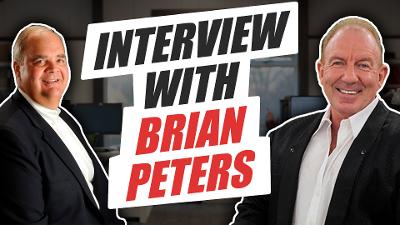
Hi, my name is Brian Peters and I’m the CEO of Brian Peters consulting. I work with the top advisors around the world in all countries. Today I have the privilege and the pleasure of chatting with Tim Yurek of Tier 1 Capital in Pennsylvania. Now, Tim is a 35-year veteran in this industry and is really at the top of his game. We’re going to learn some great secrets and insights into financial services and the world today by speaking with Tim. So Tim, great to have you on. Thank you very much for joining and welcome.
Tim Yurek:
Well thank you, Brian. I appreciate the opportunity to chat with you.
Brian Peters:
I’m going to be asking you a number of questions. Some, that people have actually written in because they knew that we’d be speaking. So I’m going to start with question one, Tim. There’s so many different types of advisors. You’ve got advisor firms, investment firms, you got banks, you’ve got credit unions. You’ve got all sorts of types of advisors. So let me ask what makes you so unique or different?
Tim Yurek:
Well, you know, Brian, that’s a good question. What I found is, when you encounter a financial advisor, when you meet with them for the first time, they ask to see everything you have, and then the conversation usually goes somewhere to this point. “Well, everything you have needs improvement and my stuff is the best.” That’s because they’re focused on the product. What makes me different is when we sit down, we’re going to talk about how you’re using your money. We’re going to look for inefficiencies in how you’re using your money. To give you an analogy, let’s say you want to get better at golf, this is how the other guys would approach it. “Show me your golf clubs, your golf clubs stink. Come to my pro shop. I’ll sell you a new set of golf clubs.” My analogy is, “Hey, Brian, I don’t know if you need clubs, but I know the best way to improve your swing in golf is to take a look at the swing. So let’s go down to the range, take a look at how you can swing the club and then we can maybe make some recommendations.” What we do is we look for any inefficiencies in how you’re using your money and then make recommendations on how you can improve yourself financially.
Brian Peters:
Wow. That sounds much different than everybody else. So, what can you really help your clients achieve?
Tim Yurek:
Well, Brian, first and foremost, what we help our clients to achieve is having access to their money. That is the center of our planning because when you don’t have access to money, you have stress, you have frustration, you have anxiety, you can’t take advantage of opportunities. If a financial or a health emergency occurs, you don’t have access to money. That creates more stress and anxiety. Additionally, people come to us looking for confidence. You know, they’re rich on paper. They have a lot of money going through their hands, but they feel like failures because they don’t have access to their money. Our process shows them how to create greater access to their money. What they don’t realize is they have it within their power to achieve the freedom and the confidence that they want. They just don’t know how to do it.
Brian Peters:
That sounds great. That sounds like a real problem solver. So Tim, tell me, how did you come up with this process?
Tim Yurek:
Well, you know, Brian, I realized that following conventional financial wisdom doesn’t work for the client, it works for the financial institution. It works for the financial advisor, but it leaves your money inaccessible when you need it most. So I realized something had to change.
Brian Peters:
So, the change was, instead of taking on more things, the change was to use what they were currently using more efficiently. Is that right?
Tim Yurek:
Yeah, exactly. So, all we do is help people to analyze what they’re doing with their money and then determine whether or not it’s leaving their money accessible or inaccessible. Then if their money was inaccessible, we looked at a different way of doing things. So that their money can be accessible to them. Now, the financial institutions don’t like that, but it’s better for the client.
Brian Peters:
Now I’m going to ask you the $64,000 question. Why did you even bother trying to come up with this process? Why do it like this?
Tim Yurek:
I mentioned earlier that our clients come to us frustrated, stuck financially, and full of anxiety. Well, back in 1993, I was in the same spot. I was making good income. I was following conventional wisdom to the book and I didn’t have any access to money. I was stuck financially, and I was frustrated. I thought it was my fault because I wasn’t making enough money. The problem wasn’t that I wasn’t making enough money. How I was using my money was the problem.
Brian Peters:
Oh, that makes total sense. Do you think that today it’s mostly in America, or do you think that a lot of people are in that similar situation?
Tim Yurek:
Brian, it’s amazing. Every day we see people who are in the same boat. I just met with a client out in California. We did a virtual meeting and they were in the same boat. The husband said, “I’m making more money now than I’ve ever dreamed and yet I can’t pay my bills on a monthly basis. What’s going on, what’s wrong?” See that’s where people come to us. They don’t have confidence because they think it’s their fault. It’s not their fault, to a degree. It is because they’re following conventional wisdom, but they think they’re doing everything right by the book. They are, but it’s not in their best interest. That’s why they’re stuck, frustrated and full of anxiety.
Brian Peters:
I can tell you’re really passionate about fixing that for people too. That’s great, Tim, it’s all sort of sounding so simple and obvious and straightforward. So if that’s the case, why isn’t everyone doing it?
Tim Yurek:
You know, Brian that’s a great question. You know, the American actor Will Rogers has a quote. He says “The problem in America, isn’t what people don’t know. The problem in America is what they think they know that just ain’t so.” You know, what I found is when I meet with clients, they’re doing the best they can with the money they have, based on the information that they have. The problem is they don’t have all the information. So, one of the questions I ask my clients when I first meet them is, “What if what you thought to be true about finances turned out not to be true, when would you want to know?” They all say immediately. So, the problem is they don’t have all the information.
I met with a client and his wife the other day, he’s a business owner. He said to me during the meeting, why isn’t everybody doing this? I said, well, they haven’t met me yet. So we put this plan together for them and I just got a text the other day and he said, “Hey, we’re going to move forward with that plan and I just want you to know, last night was the best night’s sleep I’ve had in months.” That just gives me such pleasure to see that I’m making an impact for people on a daily basis.
Brian Peters:
Wow. That’s fantastic. That must’ve made you feel really, really great. That’s great.
Tim Yurek:
Absolutely.
Brian Peters:
So Tim, I can tell you’re really passionate about what you do. So when you wake up in the morning, what’s your mission statement?
Tim Yurek:
Well, Brian, it’s real simple. We just want to make people sleep better at night so that when they wake up in the morning, they can take a breath knowing that they’re going to be okay. They don’t have the stress of thinking that they’re living pay to pay or week to week. They don’t have the pressure of having to make a sale. We help our clients sleep better and we give them that confidence.
Brian Peters:
Great, fantastic. So Tim, I can tell you’re really passionate about what you do and you really do like helping people. Now, the world’s in a bit of a tough place at the moment for business people and everyday families. So I understand that you’ve got a special offer for any business owners who would like to chat with you over the next 30 days. Would you share that with us?
Tim Yurek:
Brian we’re going to offer a free, no cost, no obligation cashflow analysis for business owners to see if we can help them to free up some cashflow coming out of this pandemic. Additionally, for families, we’ll offer a free 30-minute phone conversation to answer any questions that they might have about their finances.
Brian Peters:
Great. So, anybody who’s really interested in a no obligation free 30-minute chat, just get in touch with Tim, and he’ll be more than happy to help you. So, Tim, it’s been really great chatting with you and great learning all about what you do. We wish you very well and continued success.
Tim Yurek:
Thanks, Brian. I appreciate it. Thanks for your time. You’re very welcome
“We’re going to show you why it’s not what you buy, but it’s how you pay for it and how using leverage can actually get you a higher rate of return on your money.”
Have you ever wondered how you can get the most out of your real estate investment? Today we will be using an example about how to leverage your money for real estate investing but know that this concept can be applied to any type of investment. So, keep that in mind as we go through todays example.
We’re going to show you how using the cash value in your life insurance can maximize the rate of return on your real estate investment. We have clients who invest in real estate who ask us, “ Why should we put money in a life insurance policy and earn a measly 4% when we can put money in a real estate deal and earn an infinite rate of return?”
We’re going to look at a real estate example, and we’re going to show you three different ways of acquiring the property; paying cash, financing with a traditional mortgage, and leveraging your life insurance cash value. We’re also going to show you how leveraging can actually get you the ultimate rate of return on your investment.
Here we have a $250,000 property and we are choosing to pay cash. After closing costs, we have $255,000 of our own money in the deal. We have no costs for financing and after taxes, insurance, and maintenance, we ended up with a gross rental income of $2,500 per month. We’re going to sell the property in 60 months and we’re going to assume that the value of the property appreciates at 2% per year over that ownership period. When we sell the property, five years later, the value of the property is $276,270. After we calculate everything that we received, we ended up with 13.08% as a rate of return on the real estate investment.
Now you may be wondering if the property is only appreciating at 2%, how did we get a 13.08% rate of return? Again, we have to evaluate the fact that we received $2,500 per month for 60 months. When you calculate that income versus the money we had in the deal, that’s how we can calculate a 13.08% rate of return. That’s a pretty good rate of return, but it can be so much better if we apply the laws of leverage to the purchase of the property.
Now, most people think that because we’re saving so much of interest by not financing, by not using a traditional mortgage, that this rate of return is as good as it gets. We’re going to show you why it’s not what you buy, but it’s how you pay for it and how using leverage can actually get you a higher rate of return on your money.
Next, let’s look at the classic 80/20 finance. We’re going to finance 80% of the purchase price, put 20% down and pay closing costs out of pocket. It’s the same deal. It’s the same building, same purchase price, and the same closing costs. The only thing we’re changing is the fact that we’re using other people’s money.We’re going to borrow 80%, $200,000 at 5% for 20 years. That means we have a mortgage that we didn’t have by paying cash and the mortgage is $1,320 per month. So how are we going to pay for that mortgage? We’re going to pay for it from the rental income, the $2,500 per month.
We’re going to evaluate this over the same 60-month period. We’re going to sell the property again in five years at 2% annual appreciation. We only have $55,000 of our own money in the deal. We’re also going to get the tax deduction because a portion of the mortgage is interest. So now we have less monthly income, $1180 versus $2,500, but we also have less of our money in the deal. When we sell the property, the fact that we have a mortgage doesn’t change the selling price of the building, it’s still $276,270. The only thing that changes is, when we sell the building, we have to pay off the mortgage. Our net cash out is lower. It’s $109,380.
Now you may be thinking with a lower cash out and a lower monthly income, it’s really surprising that the rate of return is actually higher when you finance, right? But you need to consider that we only have $55,000 in this deal. Our real estate investing clients, they understand leverage, and they would never pay cash for a building. If they have $255,000, they can buy five buildings instead of one by not paying cash. They understand leverage and that is the beauty of using other people’s money. Would you rather earn 34.37% on one property or on five?
Let’s take a look at the final scenario where we finance 80%, but we borrow against our life insurance policy for that 20% down payment. The only expense we have out of pocket is the closing cost of $5,000. We have the same property, $250,000 with the same closing costs of $5,000. But this time we’re going to mortgage the $200,000, just like in the last example. We have a 5% loan for 20 years and we have the same mortgage payment. The difference is we’re going to take $50,000 against our life insurance policy. We’re also going to finance that at 5% for 20 years. Our total mortgage payment is actually going to be a little higher and our monthly cashflow is going to be a little lower.
When we sell the property for $276,270, after five years, our net cash out is $67,633 because we have to pay off the bank mortgage and the loan we took against our life insurance. But remember, we only had $5,000 of our own money in the deal. Looking at it, this is the ultimate leverage. When we calculate all the income that we received, plus the appreciation of the property, we end up with a rate of return of 245.87%. Now, you might be thinking that that’s a great rate of return and it surely is. But actually, this scenario is so much better because what we didn’t tell you is the fact that when we borrowed against our life insurance, our money was still continuing to earn uninterrupted compounding of interest at the rate of 4%. Additionally, we have a death benefit. So, we have so much more than we’re actually showing here, that we couldn’t and didn’t calculate into the rate of return.
This is why it’s not what you buy, but it’s how you pay for it that really matters. Leveraging can really increase your rate of return. We really illustrated that with these examples today, you know, conventional wisdom would have you believe that the less you pay the banks and finance companies and fees and interest charges, the greater rate of return you can earn. Today’s example really underscores the importance of having as little of your cash tied up in the deal as possible and how leveraging other people’s money can maximize the rate of return that you could earn on your money. Not to mention you still have control over all that money that isn’t tied up in the deal.
How often do we think about what will happen if we get sick, hurt, disabled, or lose our job?
These are just some of the factors that we need to consider when investing in real estate. Buying a house is an exciting but stressful time. With so many options out there, how do you know which one is right for you? In this week’s video, we dive in to explore the pros and cons of a 15-year mortgage vs. a 30-year mortgage. We also explain the difference between a bank’s equity and your own, and other factors to consider. Remember, if you need approval to access your equity, is it really yours?
“It’s important to choose the option that gives you the most liquidity, use, and control of your money.”
Which is better a 15- or 30-year mortgage? When shopping for a mortgage, it can be so confusing because there are so many options. Buying a home is one of the largest purchases you’re going to make, and many people get hung up on interest rates. Well, interest rates are important. It’s not the only factor you should consider when choosing the right mortgage for you.
One thing to consider that’s often overlooked is inflation. When you buy a house today, you get a mortgage, the dollars have more purchasing power today than the dollars that you’re going to use to repay the bank. So the longer you can take to pay back the bank, the less purchasing power the dollars are going to have at the time of repayment.
Let me give you an example. When I was younger, my parents would send me down to the bank to pay the mortgage. The mortgage was $52.80 and at the same time, they would send me over to the local hardware store to pay the utility bills. Our electric bill at the time was about $45 or $50 and I remember asking my parents, “how much was the electric bill was when we bought the house? ” And they said it was about $4 or $5 per month.
Think about what happened over 15 years. The electric bill increased by about five times, but the mortgage stayed the same. So my parents were negatively affected by inflation on the electric bill, but they were positively affected on the mortgage because the mortgage stayed the same and they were paying that mortgage back with dollars that had less and less value over time.
Conventional wisdom tells us debt is bad, so Americans want to get their house paid off as soon as possible. You think you’re making your position safer, but the fact of the matter is you’re actually making the bank’s position stronger. Let me give you an example. If you have a $250,000 house with a $200,000 mortgage balance, if the bank had to foreclose, it might be difficult for them to break even if they had to sell that house. But if you have a $250,000 house with a $125,000 mortgage balance, it’d be very easy for the bank to break even if they had to foreclose.
Don’t get us wrong, both you and the bank are building equity, but the nature of those equities are quite different. The bank has full liquidity use and control of their equity. Whereas you would need to qualify to access the equity in your real estate. The bank’s equity is cash and your equity is real estate equity, which requires bank approval in order for you to access your equity. So, basically if you need approval to access your equity, is it really yours? The next thing to consider when choosing a mortgage is control. Think about it. If your goal is to regain control of your money, then you should not be giving up your discretionary income to the bank. That’s money that you could be using for your lifestyle or savings.
You’re taking money that you have complete liquidity, use and control over and giving it to the bank and now they own and control that money. Which brings us to our third point. What happens if you become sick, hurt, disabled, or lose your job? You may have a lot of money in real estate equity, but now you have to apply to the bank in order to access that money and make no mistake. Banks are not loaning you money because you have equity in your real estate. They’re loaning you money on the premise that you’re going to be able to repay them. Anytime you want to tap into your real estate equity, you need to go to the bank, apply and prove that you could repay the bank.
It doesn’t matter if you had a great payment history on your previous mortgages. They don’t care if you actually paid extra on your previous mortgages. They have to consider whether or not you can pay back this new wealth. Let me give you an example. We have clients who had a $175,000 house with a $50,000 mortgage balance. The husband got sick and couldn’t work. They figured they could tap into their equity when they applied to do a refinance, even though the monthly payment was going to be lower, the bank declined them because they couldn’t prove that they could pay back the new loan.
So, all along the way, while this family was building their home equity, making their mortgage payments, they believed that they were making their financial position stronger and safer. But at the end of the day, it ended up hindering them. If you need to get approval from somebody else to get your money, is it really your money?
The fourth thing to consider when choosing a mortgage is what happens if the economic climate changes. For example, interest rates can go up or down. If interest rates go down and you’re locked in for 30 years, you could always refinance if it makes sense for you. But what happens if interest rates rise? Well, this happened actually in the early 1980s people who had money outside of real estate equity were able to take advantage of interest rates on CDs and money market accounts that were 15% or 16%. If you have money tied up in real estate equity and the CD rates go to 15% or 16% you can’t tap into your equity because the bank is going to charge you more than the 15% or 16% if you’re borrowing.
It’s really going to put you in a situation where you can’t take advantage of opportunities if those opportunities arise. This brings us to our fifth point when choosing a mortgage tax deduction. Not everyone will qualify for the mortgage interest deduction, but if you do, do you want all of it, none of it or some of it.
Most people want as much as they can get. With the 15-year mortgage, there’s less opportunity for tax deductions.
In conclusion, we’ve been trained to shop for mortgages using one criterion only, interest rates. While interest rates are an important factor, they’re not the only factor you should consider when choosing a mortgage. Let’s face it, if the banks made the same amount on all the mortgages, there would only be one option. It’s important to choose the option that gives you the most liquidity, use, and control of your money. Again, if the point is to regain control of your money, does it make sense to give that money to the bank and then still have to get approval to access your money?
In this video we break down the important things to consider when choosing an insurance company for the infinite banking concept.
1.) Choose the right agent
2.) The process is much more important than the product
3.) Make sure the company you choose is a mutual insurance company
4.) The company should have a proven track record of paying dividends and sharing profits with policy holders
There are hundreds of thousands of insurance agents out there, but only about 200 are licensed IBC practitioners with the Nelson Nash Institute. “
Are you thinking about getting an IBC policy but aren’t sure where to begin? The number one criterion when choosing the right insurance company for the infinite banking concept is to choose the right agent. There are hundreds of thousands of insurance agents out there, but only about 200 are licensed IBC practitioners with the Nelson Nash Institute.
As a licensed practitioner, we’re not only trained to set up and structure a policy, but most importantly, to guide you on how to use your policy throughout your life. It’s important to find someone who’s not only knowledgeable but who’s also implementing this in their own financial life. The last thing you want is someone who’s pitching you a policy but doesn’t believe in the concept enough to put their own skin in the game. Ultimately, your success or failure in any given methodology is going to come down to your execution.
The process is much more important than the product. The next criterion is to make sure you’re dealing with a mutual insurance company. Mutual insurance companies were formed for the benefit of the policy holders. All profits that the insurance company makes are funneled back to the policy holder in the form of tax-free dividends. In contrast, a stock owned insurance company funnels their profits back to their shareholders because they’re the owners of the company.
So, a stock owned insurance company is there for the benefit of the owners of the company, the shareholders. It’s similar to a bank. A bank is there for the benefit of the owners of the bank, the shareholders of the bank. You see, if you want to become your own banker, it’s important not only to control the process of the banking, but also to benefit from the profits of the banking, which can only happen with a mutual insurance company.
The next criterion you want to look for when choosing an insurance company? Does it have a proven track record of paying dividends and sharing profits with policy owners? The companies we choose for our clients have been paying dividends for more than 120 consecutive years. That’s World Wars, depressions, recessions, gas crisis’s, you name it. They’ve been through it all.
In conclusion, these are the criteria we use when choosing an insurance company for the infinite banking concept, but again, the most important thing is choosing the right agent for you. You want somebody who’s going to take the time to understand your situation and then set up a plan that will help you to maximize your benefits from the plan according to your situation.
If someone can get your money, is it really yours? In today’s video we compiled a list of six reasons why you should use whole life insurance for the infinite banking concept.
1. Control
2. Safety
3. Guaranteed growth
4. Collateral opportunities
5. Tax deferred growth
6. Asset protection
Life insurance is actually designed to have more cash tomorrow than it does today. “
Have you ever wondered why people use whole life insurance for the infinite banking concept? The first reason is, control. Let’s face it, you can’t regain control unless you’re actually in control. Life insurance is a unilateral contract. What does that mean? Well one party, the insurance company, has a binding obligation. They have to guarantee the cash value, the death benefit, and any other benefits. The other party, the policy owner, has very few promises, which is basically to pay the premium. Once the policy is approved and put into effect, the insurance company is working for you. That is control.
Number two is safety, life insurance companies reserve 95 cents of every dollar that’s deposited and in contrast, banks only reserved 2 cents for every dollar that’s deposited. Based on that, where do you think your money is safer? During the great depression, over 9,000 banks in this country failed. In contrast, less than one half of 1% of all life insurance company assets were impaired. That’s a big deal because people who owned life insurance contracts during that time were not only able to access their cash value to weather the storm, but they were also able to access it to take advantage of opportunities that arose during that time.
One of the best examples of this is JC penny, the American retailer. He had over 1400 stores before the great depression and he actually borrowed against his life insurance to keep his business open and weather that storm. This takes us to our third reason. Guaranteed growth. Life insurance is actually designed to have more cash tomorrow than it does today. There’s no chance for market loss because your growth is guaranteed. Your money is allowed to continuously compound. This takes us to our fourth reason. Collateral opportunities. What does that mean? Collateralization is important because it allows you to access your money without interrupting compounding. It’s like your money could be in two places at one time.
Collateralization means that your money is always in your policy and if you want to access it, the insurance company gives you a separate loan and puts a lien against your money, your cash value. When the loan is paid off, the lien is released, and your money is exactly where it would have been had you not borrowed. In essence, your money has been able to achieve continuously uninterrupted compounding.
Number five is, tax deferred growth. Money grows in your policy on a tax deferred basis. Keep in mind that doesn’t mean that it grows tax free, but you can access it on a tax favored basis. The point is you can’t accumulate wealth in a taxable environment. Let me give you an example. If you start off with a dollar and that dollar doubles every year for 20 consecutive years, meaning that you earn 100% interest each and every year for 20 consecutive years, at the end of 20 years, your dollar would’ve grown to $1,048,576 however, you didn’t pay tax on that money. If you had to pay tax in a 25% tax bracket, how much do you think you would be left with after tax?
Well, 25% of 1 million is 250,000 so I think we’d be left with about $750,000.
The reality is you would end up with $72,571, but what happened to the rest of the money? Well, it was never there. Your money was never allowed to double. You were never allowed to earn 100% interest because you had to pay taxes each and every year along the way. That’s why you end up with less money in a taxable environment.
Number six is, asset protection. Life insurance is protected from creditors, predators, and legislators. Life insurance is regulated by the 50 States. Each state has different levels of asset protection. Check with your state to see how much protection you have on your policies, but let’s face it, if somebody can get your money, is it really yours?
Let’s recap the six reasons why we use whole life for infinite banking. Number one, control; two, safety; three, guaranteed growth; four, collateral opportunities; Five, tax deferred growth and six, is asset protection. My mentor, Nelson Nash, author of the bestselling book Becoming Your Own Banker, said it best. Wealth has to reside somewhere. What better place than a whole life insurance policy? A free contract between free people!
What are the benefits of whole life insurance? In this video, we explain whole life insurance benefits and why they are essential in any diversified portfolio. A benefit of whole life insurance is that your money is continuously being compounded. There are three known factors that could interrupt compound interest, using your money, taxes, and market losses. We break these down for you and explain why whole life insurance takes them out of the equation. Another added benefit is that whole life insurance also protects you against inflation. When you own a whole life insurance policy, you’re allowing yourself to take risks in other investments!
“To call whole life insurance an investment is actually demeaning to whole life insurance.”
Have you ever wondered what the benefits of whole life insurance are? The number one reason why whole life insurance should be a part of your portfolio is because of efficiency. When we’re talking about efficiency, in this case, we’re talking about the fact that your money is continuously compounding in a whole life insurance policy. There are three things that could really interrupt the compounding of interest on your money.
The first, is using your money, then taxes and then market losses. So how does using your money interrupt compounding? Well basically you save and then you use the money to buy a car, or to make a down payment on a house, or to pay for a vacation or to pay for college, and then once you access that money, it’s no longer available for compounding. In contrast, when you take a loan against your life insurance policy, you’re able to continuously compound because you’re taking a loan against the cash value. You’re not taking the money from your life insurance policy.
The second factor that could interrupt compounding on your money are taxes. When you think about it, with traditional savings and investment accounts, you get a 1099 or a dividend statement and with mutual funds you could actually get a 1099 or a capital gain statement in a year when you lost money. Overall, it’s sort of like adding insult to injury and a lot of people don’t even realize how inefficient this really is because they’re paying their taxes from their lifestyle. They’re not taking money from their investments or savings, so they never have an opportunity to see the eroding effect that taxes are having on their investments and savings. The bottom line is, you cannot accumulate wealth in a taxable environment.
The third factor that can interrupt compound interest are, market losses. When you lose money in the market, you take a step backwards and need to restart the compound interest process. Again, with whole life insurance, you have contractual growth, which means that the growth is guaranteed by contract in the policy. On top of that, you have the ability to earn dividends and once dividends are paid, that could never be taken away. In conclusion, whole life insurance is efficient because it takes the three factors that could interrupt compound interest out of the equation.
The next benefit of owning whole life insurance is protection against inflation. Inflation is known as the stealth tax. You experience it but you never actually see it and what better way to protect yourself against the stealth tax than to purchase dollars in the future with pennies today. Use those pennies, the cash value in the life insurance, to purchase additional income producing assets. Life insurance is known as an asset because you’re able to maintain the death benefit, but also access the cash value along the way to purchase other investments and assets. When you get to retirement, you can use those additional assets to supplement your income and finally, you can leverage the death benefit in retirement to generate some additional passive tax-free income. Whole life insurance is a way to truly diversify your portfolio. True diversification is putting money you don’t want to lose in a place that you could never lose.
In conclusion, whole life insurance compliments your other assets. By owning a whole life insurance policy, you’re allowed to take risk in other investments, but understand life insurance is not an investment. To call whole life insurance an investment is actually demeaning to whole life insurance. This is because whole life insurance can do so much more than an investment.